
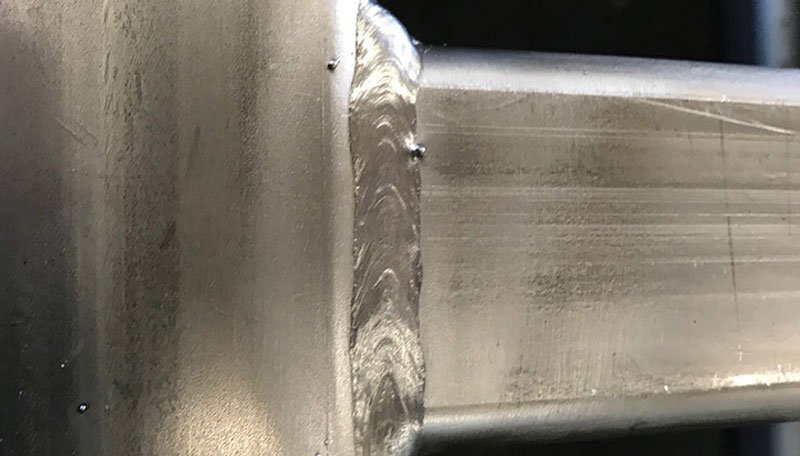
Stainless Steel Fabrication Perth
Industrial and production stainless steel fabrication: 304, 316, 321, 310 and heat-resisting grades cut, formed, pressed, welded and machined in one Bassendean workshop, with a metallurgist to say which grade you should be using.
Pressform has fabricated stainless steel for Western Australian industry since 1976, from the first 40 tonnes of stainless wire we turned into refractory anchors for Loy Yang, to the vessel components, hoppers, guards, pipe supports and pressed parts we make for mining, water, chemical and process plants today. Every process a stainless part needs is on site, and the estimator quoting it knows the difference between 304 and 2205.
Industrial stainless steel fabrication in Perth
We make stainless for plants, not kitchens. If you need a bench or a splashback, Perth has good specialists. If you need a stainless component that will hold pressure, resist a process chemical, survive a kiln, or be made a thousand times the same, that is what this workshop does.
Stainless steel is chosen for corrosion resistance, hygiene or heat, and each of those is a different engineering problem. A 316 hopper in a water-treatment plant, a 321 duct liner at 700°C and a 304 guard on a conveyor are all "stainless fabrication", but the grade, the weld procedure, the forming allowance and the finish are different for each. Pressform's metallurgist sets those parameters, which is why the workshop takes on the stainless work most fabricators would rather not.
Typical stainless work: hoppers, chutes and bins; tank and vessel components; pipe supports, clamps and saddles; guards, screens and perforated panels; frames, skids and platforms; pressed and stamped components in volume; refractory anchors and furnace hardware in heat-resisting grades; and machined stainless fittings, studs and fasteners.
Part of our complete metal fabrication capability →
Stainless steel grades we work in
| Grade | Typically used for | Notes |
|---|---|---|
| 304 / 304L | General industrial, food, water, architectural | The default; adequate wherever chlorides are low. L grade for welded sections |
| 316 / 316L | Marine, coastal, chemical, mining process water | Molybdenum for chloride resistance; specify for anything near salt or process chemicals |
| 321 | Elevated temperature to ~900°C | Titanium-stabilised; furnace and exhaust ducting, refractory anchors |
| 309 / 310 | High temperature to ~1,000 to 1,100°C | Kiln and furnace hardware, refractory anchors; 309 also the preferred consumable for dissimilar welds |
| 253MA | High temperature, cyclic service | Heat-resisting grade for anchors and furnace components |
| 3CR12 and ferritic grades | Wear and abrasion in mildly corrosive service, mining | Lower cost than austenitic; magnetic; different forming and welding rules |
Material is sourced to specification with mill certificates where required. If you are unsure which grade the service needs, tell us the environment, temperature and load and our metallurgist will recommend one.
Send your drawing and gradeEvery stainless process under one roof
Laser cutting
6 kW fibre laser, stainless to 20 mm, 3,000 × 1,500 mm table, nitrogen-assist for a clean, oxide-free edge that welds without grinding. Laser cutting →
Punching and perforating
CNC turret press for stainless screens, guards and panels; clearances set for work-hardening grades. CNC punching →
Pressing and stamping
Stainless anchors, clips, brackets and cups on the 630-tonne press with tooling designed for stainless spring-back and draw ratios. Metal pressing →
Bending and rolling
Press brakes to 400 tonnes × 4,000 mm and CNC plate rolling; larger radii and spring-back allowance built into the flat. Bending and plate rolling →
Welding
TIG for thin and cosmetic work, MIG for structural, robotic MIG/TIG for repeat parts, stud welding for anchors and fixings; dissimilar-metal procedures for stainless-to-carbon joints. Welding → Robotic welding →
Machining
CNC milling and bar-feed turning of stainless fittings, studs, bushes and flanges. CNC machining →
Finishing
Brushed, linished or as-welded; pickling and passivation, glass-bead blasting and polishing arranged.
Handling
Stainless is worked on stainless-only consumables and protected from carbon contamination through the workshop.
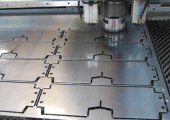
Nested laser cutting
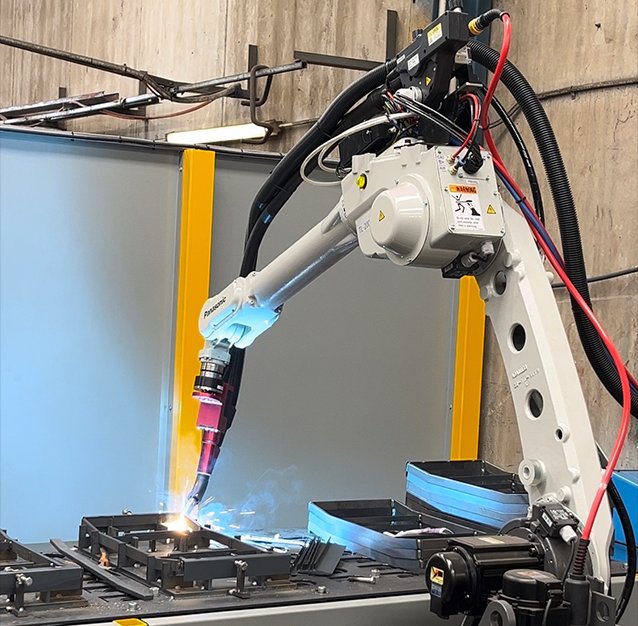
Robotic welding cell
Getting stainless right
Most stainless failures are not the material's fault. They are the wrong grade for the environment, carbon contamination during fabrication, a weld that was never pickled, or a bend that cracked because the radius was set for mild steel. Pressform's approach:
Grade first
The metallurgist reviews grade against service on every stainless quote. 304 where 316 was needed is the most common and most expensive mistake we see.
Contamination control
Stainless-only grinding discs, brushes and consumables; no carbon-steel tooling on stainless surfaces.
Distortion control
Stainless conducts heat poorly and expands more than steel; weld sequence, fixturing and, for repeat parts, the robotic cell keep it flat.
Forming allowances
Bend radius, spring-back and grain direction are checked on the drawing before the blank is cut.
Post-weld treatment
Pickling and passivation restore the passive layer after welding where the service requires it, specified in the quote and not left to chance.
Stainless fabrication for mining, water, process and construction
Mining and mineral processing
Process-water components, screens, chutes, wear parts in ferritic grades, and heat-resisting hardware for roasters and calciners.
Water and wastewater
316 hoppers, weirs, frames, pipe supports and fittings for treatment plants.
Chemical, oil & gas and refining
Vessel components, supports and fittings in 316, 321 and duplex.
Cement, steel and power
Refractory anchors and furnace hardware in 304, 310, 253MA and nickel alloys. Refractory anchors →
Food and beverage processing
304/316 frames, guards, chutes and machine components.
Building and architectural
Structural brackets, lintels, feature screens and support steel in stainless for builders and architects.
OEMs and manufacturers
Pressed, punched and robot-welded stainless components on standing orders.
Stainless fabrication for your project
One-off components
A replacement 316 bracket, a modified guard, a single vessel fitting to drawing.
Fabricated assemblies
Hoppers, frames, skids and platforms, welded, finished and inspected.
Production components
Pressed, punched and robot-welded stainless parts in volume, on tooling and jigs built here.
High-temperature and refractory hardware
Anchors, studs and furnace components in 310, 321, 253MA and nickel alloys.
Machined stainless
Flanges, studs, bushes and fittings from bar and plate.
How to get stainless fabricated at Pressform
Send the drawing
DXF, DWG, STEP or PDF, with grade, finish, quantity and the service environment if the grade is not fixed.
We check the grade and the design
Grade against service, bend radii, weld access, finish and any pickling or certification requirement, all flagged before quoting.
We quote in writing
Material, every process, finishing and inspection. One price, one lead time.
We fabricate and finish
In Bassendean under contamination control, inspect against the drawing, and deliver or hold for collection.
Why choose Pressform for stainless steel fabrication in Perth
Fifty years of stainless
From refractory anchors in 1976 to process-plant components today; heat-resisting and corrosion-resisting grades are routine here.
A metallurgist on staff
Grade selection and weld procedures set by someone who understands the alloy, not by trial and error.
Every process on site
Laser to 20 mm, turret punching, 630-tonne pressing, 4,000 mm press brake, plate rolling, manual and robotic welding, machining and finishing.
Production capability
Tooling and jigs built in-house, so stainless components can be made in volume, consistently.
Industrial, not domestic
Vessels, plants, mines and furnaces: the work that needs the grade right.
Inspected before dispatch
Every job passes our quality management system.
Stainless work from the shop floor
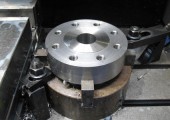
Machined stainless flange, turned to drawing
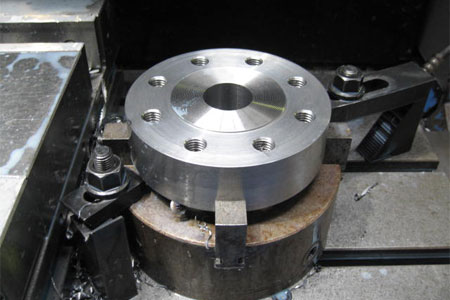
Flange faced and drilled on the lathe
Laser-cut components, nested for production
Fittings and fasteners ready for dispatch
Robotic welding cell
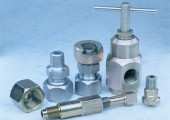
Machined valve and fitting components
Stainless steel fabrication FAQs
What is the difference between 304 and 316 stainless steel?
Both are austenitic; 316 adds molybdenum, which resists pitting from chlorides in salt air, coastal sites, pools and many process chemicals. 304 suits most indoor, general and food applications and costs less. If the part will see salt or process water, specify 316.
Do you make stainless benches, splashbacks or balustrades?
Not benches or splashbacks. Perth has specialists for commercial kitchens. We do fabricate stainless balustrade and handrail components, lintels and brackets for builders as part of structural and architectural work, and we make guards, screens, frames and process components for industry.
How thick can you laser cut stainless?
Up to 20 mm on our 6 kW fibre laser, on a 3,000 × 1,500 mm table. Thicker plate is sawn or plasma cut.
Can you weld stainless to carbon steel?
Yes. Dissimilar joints are made with 309-type consumables to procedures set by our metallurgist, the same procedures we use for refractory anchors on carbon-steel shells.
Do you pickle and passivate after welding?
Yes, where the service requires it. Pickling and passivation are specified in the quote and arranged through our finishing partners.
Can you press or stamp stainless components?
Yes. Stainless anchors, clips, brackets and drawn cups are made on our 630-tonne press with tooling designed for stainless spring-back and work-hardening.
Do you work in duplex or heat-resisting grades?
Heat-resisting grades such as 309, 310, 321 and 253MA are routine because of our refractory work.
Can you supply material certificates?
Yes. Mill certificates are supplied on request and are standard for pressure, structural and food-contact work.
Do you take small stainless jobs?
Yes. A single 316 bracket is quoted the same way as a batch.
What is the lead time?
Depends on grade availability, quantity and workload; confirmed in writing with every quote.
Where are you, and do you deliver?
23 Jackson Street, Bassendean WA 6054. Perth metro delivery on our own truck; freight arranged for regional WA and interstate.