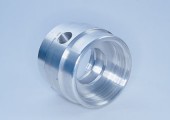
Materials We Fabricate
Stainless steel, aluminium, copper, brass, titanium, nickel alloys and carbon, high-tensile and quench-and-tempered steels, cut, formed, welded, pressed and machined in one Bassendean workshop, with a metallurgist on staff to say which one you should be using.
Most fabricators are comfortable in mild steel and will have a go at stainless and aluminium. Pressform was founded by a metallurgist in 1976 and still employs one, which is why the estimating team quotes 2205 duplex, Inconel, titanium and boiler-grade steel with the same confidence as a mild-steel bracket. This page sets out what we do in each metal, the grades we work in, how each behaves on the machines, and what to put on the drawing.
One workshop, every metal
The processes are the same whatever the metal, from laser or plasma cutting to punching, pressing, bending, rolling, welding, machining and finishing, but every metal behaves differently on each machine. Aluminium springs back further than steel and needs a bigger bend radius. Copper and brass reflect laser light and cut thinner. Stainless work-hardens under a punch and cracks in a tight draw. Titanium welds cleanly only under full gas cover. High-tensile steel folds at a radius that would be fine in mild steel and splits.
Getting those details right is the difference between a part that fits and a part that comes back. Pressform's metallurgist sets material and process parameters, advises on grade selection, and is the person the estimators consult when a drawing calls for something unusual.
Laser cutting capacity by material
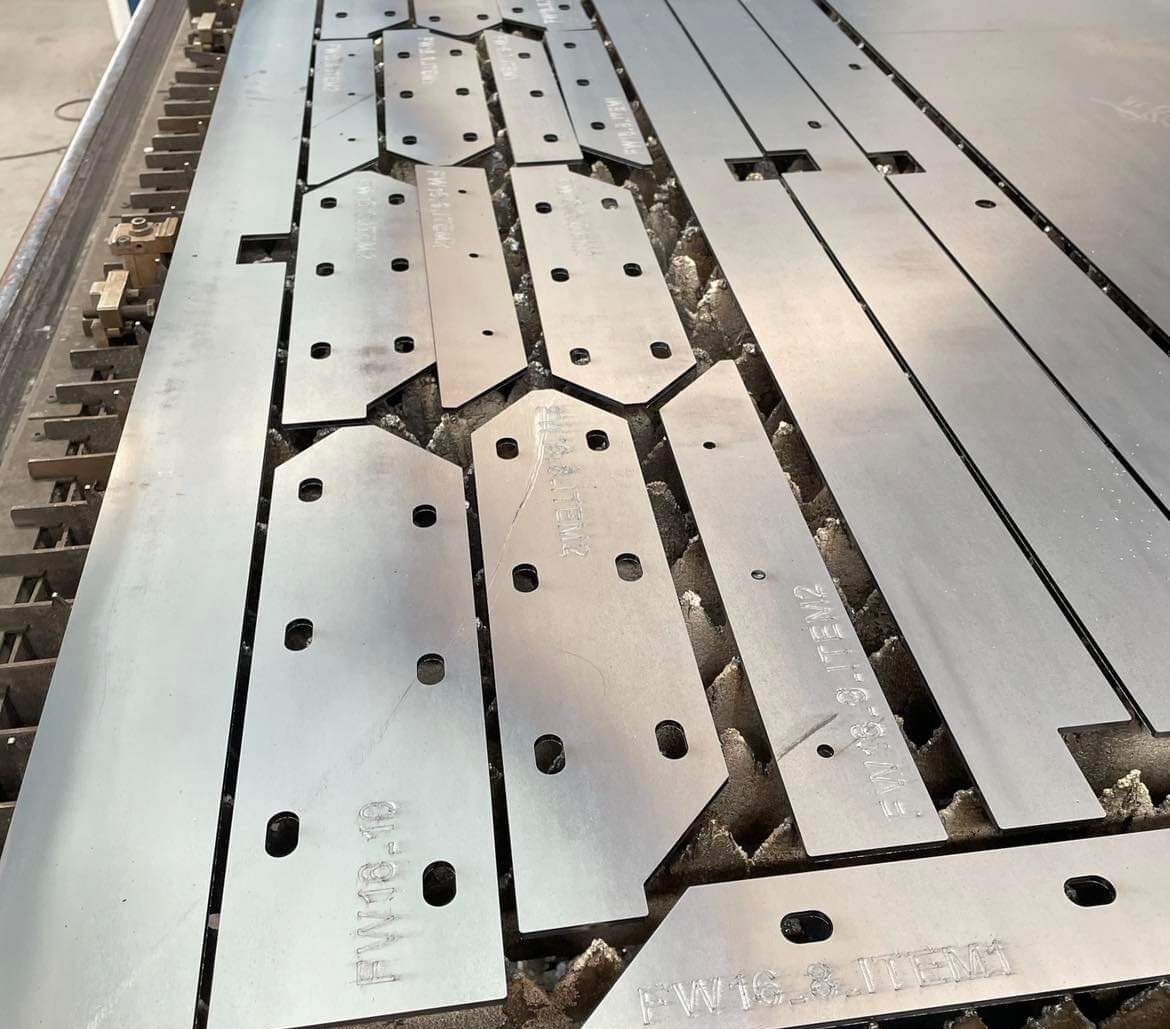
6 kW IPG HACO fibre laser, 3,000 × 1,500 mm sheet-exchange table
Thicker carbon steel is cut on high-definition plasma. Laser cutting →
Stainless steel fabrication
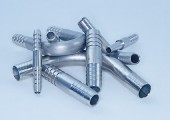
Vessel components, hoppers, guards, brackets, refractory anchors, architectural work and food, water and chemical-plant parts in austenitic and ferritic grades.
Grades: 304/304L, 316/316L, 321, 309, 310, 253MA, 3CR12 and other ferritic grades, plus 2205 duplex and 904L for higher-specification service.
How it behaves: Austenitic stainless work-hardens quickly, so punching and deep drawing need the right clearances and lubrication, and tooling that has been set for it. It springs back more than mild steel on the brake and needs a larger inside radius. In welding, distortion is the main problem, because stainless conducts heat poorly and expands more than steel, so sequence and fixturing matter, and our robotic cell helps on repeat parts. Carbon contamination from steel tooling or grinding discs causes rust spots; stainless is handled on dedicated tooling and finished with stainless-only consumables.
What to specify: Grade (304 vs 316 matters in marine and chemical service), surface finish (2B, No. 4, mirror), whether pickling or passivation is required after welding, and the service environment if you are unsure of grade, and we will advise.


Aluminium fabrication
Enclosures, frames, panels, screens, trays, transport components and lightweight structural parts in marine and structural grades.
Grades: 5005, 5052, 5083, 6061 and 6082 are our commonly run grades.
How it behaves: Aluminium is soft, light and reflective. Fibre lasers cut it cleanly where CO₂ lasers struggle, but it needs a clean edge treatment for welding. It springs back more than steel and cracks if bent tight across the grain, so bend radius and grain direction are checked on every drawing. Welding aluminium needs clean, oxide-free joints and higher heat input; MIG for structural work, TIG for thin and cosmetic work. It cannot be galvanised and should not be bolted directly to steel without isolation.
What to specify: Grade and temper (5083 for marine and welded structures; 6061/6082 for machined and extruded parts), finish (mill, anodised, powder coated), and whether the part will be welded, since some tempers lose strength at the weld.
Copper fabrication
Busbars, earthing components, heat-transfer parts, washers and formed fittings.
Grades: C11000 ETP and C10100 OFHC.
How it behaves: Copper is highly reflective and conducts heat fast, which is why laser cutting is limited to 5 mm and why welding is difficult, because the heat runs away from the joint. It is very ductile: it presses, punches and folds easily, and work-hardens gradually. Most copper components are cut, punched, pressed or machined rather than welded; where joining is required, brazing or mechanical fastening is usually the better answer, and we will say so.
What to specify: Grade and temper (soft or half-hard), surface condition, and whether the part is electrical, since conductivity requirements decide the grade.
Brass fabrication
Machined fittings, turned components, decorative and architectural parts, pressed hardware and washers.
Grades: C26000 cartridge brass for forming; C36000 free-machining brass for turned parts.
How it behaves: Brass machines beautifully, and free-machining grades are the reason bar-feed lathes exist, so it presses and punches well in cartridge grades. It is less reflective than copper, so laser cutting reaches 8 mm. Welding is rarely the right process because the zinc content fumes and porosity is hard to control; brazing or mechanical assembly is usual. Bending depends on grade: cartridge brass folds, free-machining brass cracks.
What to specify: Grade by application (forming vs machining), surface finish, and whether the part will be plated, since plating needs a specified finish underneath.
Titanium fabrication
Corrosion-resistant components for chemical, marine and process service, and lightweight high-strength parts.
Grades: Grade 2 (commercially pure) and Grade 5 (Ti-6Al-4V).
How it behaves: Titanium is strong, light and almost immune to chloride corrosion, and it is unforgiving to work. It springs back heavily and needs generous bend radii; it machines slowly with rigid set-ups and sharp tooling because it work-hardens and holds heat at the cutting edge; and above about 400°C it absorbs oxygen and nitrogen from the air and embrittles, so welding needs complete argon shielding of the weld, the root and the cooling metal. It is not a job for a general workshop. It is a job for one with a metallurgist.
What to specify: Grade, whether the part is welded (and to what standard), and the service environment. Titanium is expensive; if a stainless or duplex grade would do the job, we will tell you.
Not sure which metal? Ask the metallurgist.
Grade selection is where most material problems start: 304 specified where 316 was needed, aluminium where a chloride environment will pit it, mild steel where a Q&T grade would have lasted five times longer. Pressform's metallurgist reviews material choices as part of quoting. Tell us the service conditions, meaning temperature, environment, load and life, and we will recommend a grade before you commit to a drawing.
Ask about a materialCarbon steel, high-tensile and quench-and-tempered steel fabrication
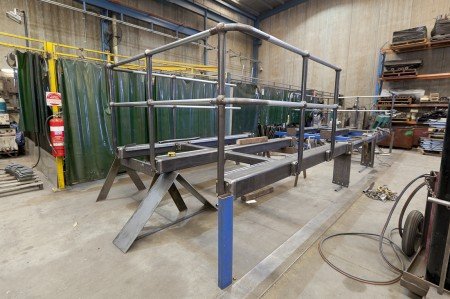
Structural assemblies, skids, frames, chutes, guards, pressed and punched components, wear plate and machined parts, the bulk of what any fabricator makes, plus the grades most avoid.
Grades: Mild steel (AS/NZS 3678/3679 grades 250, 350), forming and drawing grades, high-tensile and structural grades, boiler-grade plate, quench-and-tempered wear and structural plate (e.g. Bisalloy/Hardox-type 400 and 500 grades), and galvanised and pre-coated sheet.
How it behaves: Mild steel is the baseline every machine is set for. The grades that need thought are the others: high-tensile and Q&T steels spring back hard, need larger bend radii, are sensitive to heat-affected-zone softening when welded and cut, and can crack if formed across the rolling direction or welded without preheat. Boiler-grade plate has traceability and procedure requirements. Pressform runs all of them regularly for mining and structural customers, with procedures set by the metallurgist.
What to specify: Grade and standard, plate direction if it matters for bending, whether weld procedures or material certificates are required, and finish. If you are specifying Q&T for wear, say where the wear is, because sometimes a hard-faced mild-steel part is cheaper and easier to weld.

Nickel alloys, heat-resisting and special grades
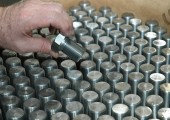
Refractory anchors, furnace and kiln hardware, high-temperature and sulphur-service components, and anything the standard grades cannot survive.
Grades: Inconel 600 and 601, Incoloy 800, 253MA, 310, 309, 3CR12, Hastelloy, Monel, and duplex 2205 / super duplex.
How it behaves: These alloys exist for service above 900°C or in sulphur-bearing, reducing or corrosive atmospheres, and each has its own forming and welding rules covering consumable selection, heat input, interpass temperature and post-weld treatment. Pressform has manufactured refractory anchors in these grades since 1976 and developed dissimilar-metal weld procedures for furnace repair. If a drawing calls for a grade not listed here, ask, because availability is usually the constraint, not the workshop.
What to specify: Alloy and specification, service temperature and atmosphere, and any weld procedure or certification requirement.

Materials FAQs
Which metals can Pressform fabricate?
Stainless steel (austenitic and ferritic), aluminium, copper, brass, titanium, nickel alloys and heat-resisting grades, and carbon steels including forming, high-tensile, boiler-grade and quench-and-tempered plate.
Can you supply the material, or do I supply it?
We source material to specification as standard, with mill certificates where required. Customer-supplied material is accepted for some jobs. Tell us at quoting.
What is the difference between 304 and 316 stainless?
Both are austenitic; 316 adds molybdenum for better resistance to chlorides in marine, coastal, pool and some chemical environments. 304 is adequate for most indoor, food and general use and costs less. If the part will see salt, specify 316.
Can you weld aluminium and stainless steel?
Yes, both manually (MIG and TIG) and on our robotic cell. Dissimilar joints, stainless to carbon steel for example, are made to procedures set by our metallurgist.
Do you work in titanium?
Yes. Cutting, forming, welding under inert gas and machining, with procedures set for it. It is specialist work and is quoted case by case.
Can copper and brass be laser cut?
Yes, on our fibre laser: copper to 5 mm and brass to 8 mm. Thicker sections are sawn, punched or machined.
Do you provide material certificates?
Yes. Mill certificates are supplied on request and are standard for boiler-grade, structural and pressure applications.
Can you help choose the right grade?
Yes. Our metallurgist reviews material selection as part of quoting. Send the drawing and the service conditions.
Request a quote
Tell us what you need made. Send drawings if you have them; send a photo or a description if you don't. Our estimating team in Bassendean will come back to you with a written quote, a confirmed lead time and, if there is a better way to make the part, a suggestion.
Call (08) 9279 8855
Monday to Friday, 8:30 am to 5:30 pm
Pressform Engineering Pty Ltd · 23 Jackson Street (cnr Alice Street), Bassendean WA 6054 · ABN 31 008 790 467 · Australian Made