
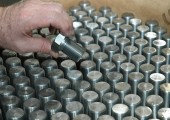
Refractory Anchors
Designed and manufactured in Australia since 1976. Close to 50 million anchors supplied to cement, steel, alumina, petrochemical and power plants worldwide.
Pressform makes the full range, covering V, Y, wire, Rod Lok, stud-weld, hexagonal mesh, hex cell, fibre and bi-metallic anchors, in stainless and heat-resisting nickel alloys, plus the studs, nuts, washers and clips that go with them. Every anchor is made to order under a metallurgist, and we design specials to your drawing. We also supply the transportable Pressform Stud Welding System, which installs Rod Lok lugs around ten times faster than manual welding.
Anchors hold the lining. The weld and the alloy decide whether they keep holding.
A refractory anchor is the metal fixing welded or bolted to a furnace, kiln, duct or vessel shell to hold a monolithic castable or gunned lining in place. It lives at the boundary between a steel shell at a few hundred degrees and a lining face that may exceed 1,000°C, under thermal cycling, expansion mismatch, creep and, in many plants, sulphur or reducing atmospheres.
Three things decide whether an anchor system works: the anchor geometry the refractory designer specifies, the alloy chosen for the service temperature and atmosphere, and the integrity of the weld to the shell. Pressform has been on the manufacturing side of that problem for almost fifty years, and the founder and managing director is a metallurgist. That is why this page covers alloys and welding as well as the product range, and why customers send us their failures as well as their orders.
Our background: the Rod Lock anchor, Loy Yang and the first Twisted Anchor →Anchor bridging steel shell (cool side) to lining face (hot side)
Refractory anchor range
Every type below is made to order in the wire diameter, height, alloy and base style you specify. Codes match the Pressform Refractory Anchors Catalogue (version 05.2024). Dimensions and options for each type are in the catalogue; if your drawing calls for something not listed, we make specials.
Family A: V, Y and wire anchors (manual weld or bolt)
PF CH Anchor
Corrugated-leg wire anchor, 5 to 8 mm
PF VW Anchor
V-base anchor for manual welding
PF VWF Anchor
Flat-base V anchor for manual welding
PF WOL Anchor
Loop-base wire anchor, staggered legs
PF WBL Anchor
Loop-base anchor for bolting or welding
PF VWL Anchor
Loop-base V anchor for bolting or welding
PF VSL Anchor
Loop-base with parallel section for thicker linings
PF YSWF Anchor
Flat-base Y anchor, 110 to 300 mm
PF YSWL Anchor
Loop-base Y anchor, 110 to 300 mm
PF Bull Horn Anchor
Wide-splay wire anchor
PF Twist Anchor
Long, weld-free twisted anchor for multi-layer castable
PF Y Anchor
Y anchor, L-base option for higher weld strength
PF Close Parallel Leg
Legs opened after first layer; stud-weld base option
PF Split Flat Bar Y-Anchor
Flat-bar Y with speed washer
PF S-Shape Anchor
Louvre-tab S anchor
Family B: Rod Lok and locking hardware
PF Rod Lok Anchor
Two-piece anchor: 8 or 10 mm wire arm locking into a steel or stainless base, developed by Pressform in 1978
PF Stud Weldable Lug
Rod Lok base for stud welding; manufacture and installation to AS/NZS 1554.2
PF Spring Locking Clip
Holds Rod Lok arms vertical through the pour
PF WN / VWFN Anchors
Wire anchors with welded mild-steel base plate
PF WNL "Christmas Tree"
Stacked anchor for deep dams, 230 to 1,140 mm
Family C: Stud-weld anchors and studs
PF HRC Stud Weld Anchor
Stud-weld base with ceramic ferrule and flux ball
PF YWS Stud Weld Anchor
Y anchor with stud-weld base
PF WB / VS-Hexnut Anchors
Nut-base anchors for stud or bolt mounting
PF Studs
Threaded one or both ends, L-base, knock-off studs
PF Nuts
Hex, round and square nuts; long-series hexnut/ferrule
PF Washers
Round, square and non-standard, in carbon, stainless, copper, brass
PF C Clips
Various configurations
Family D: Hexagonal mesh and cells
PF Hexagonal Mesh
19 to 35 mm strip mesh, 1.5 to 2.0 mm, rollable to 320 mm minimum diameter; custom shapes and banded sides
PF Hexagonal Cell
Individual cells, 1.6 or 2.0 mm, ~143 per m² at 90 mm centres; optional stud mounting
Family E: Fibre, bi-metallic and block anchors
PF Fibre Lok Anchor
Ceramic-fibre blanket pin pressed from 5 mm annealed wire
PF Fibre Lok Assembly
Pin, washer, speed clip and ferrule
PF Ceramic Cup Loks
For use with Fibre Lok anchors
PF Bi-Metallic Pin
Stainless pin crimped into aluminium cap for capacitor-discharge welding
PF Block Anchors
Anchors for refractory block
PF Wall Anchor
Plate wall anchor, M10 stud or bolt
Rod Lok anchors, the Spring Locking Clip and ten-times-faster installation
Pressform designed the Rod Lock & Rota Lock anchor in 1978 with engineer John Crocker of Crooks Michell Peacock Stewart. The wire rod arm locks into a slotted steel or stainless base, so the base can be welded to the shell first and the arms fitted and rotated upright before the pour, which is why it became an industry term.
Two Pressform developments make Rod Lok faster and safer to install:
The patented Spring Locking Clip
A thin spring-steel clip that holds the anchor arms vertical during casting, avoiding leaning arms, weakened refractory support and hot spots. At service temperature the spring temper dissipates and the arms move with expansion as designed. Serrations on the lug allow adjustment; holes in the clip let cement through. Patented in Australia.
The Stud Weldable Lug and the Pressform Stud Welding System
Conventional welding of Rod Lok bases runs at around 15 lugs per hour. Stud welding with the Pressform lug (PF-SWRLB-43, forged AISI C1020 head, flux ball, manufacture and installation to AS/NZS 1554.2) runs at around 150. The system is fully transportable, with mobile welder, leads, hand pieces, testing equipment and consumables packed in a robust container, and can be supplied on a project-by-project basis.
Lugs welded per hour: conventional weld vs the Pressform Stud Welding System
The year Pressform designed the Rod Lock & Rota Lock anchor
Choosing the alloy
Anchor metals face creep, fatigue, grain growth, phase change, embrittlement, oxidation, sulphidation and thermal-expansion mismatch with the refractory. The furnace atmosphere, whether sulphur, halogens or reducing conditions, lowers every limit below. The figures are general guidance for oxidising conditions; the refractory designer's specification governs.
Carbon steel
304 / 321
309
310 / 253MA
Inert atm.
| Alloy | Typical maximum in oxidising service | Notes |
|---|---|---|
| Mild / carbon steel | 150°C constant | Shell-side hardware only; some chrome-moly grades higher, designer to select |
| 304, 321 austenitic stainless | 900 to 950°C | Good general-purpose heat-resisting grades |
| 309 | ~1,000°C | Preferred consumable for dissimilar welds (see below) |
| 310, 253MA | up to 1,100°C | At the limit: soft, glowing pale yellow; design for creep and fatigue |
| Inconel 600/601, Incoloy 800, high-nickel alloys | Application-specific | For sulphur-bearing, reducing or cyclic service; specified case by case |
| Any wrought or cast metal | 1,200°C (inert atmosphere) | Beyond this, consider ceramic anchors |
Note on thermal expansion: austenitic grades 304 and 310 expand more than most refractories. Allow for the differential where capping or coating anchor surfaces is contemplated. The catalogue includes expansion curves.
We supply anchors in carbon steel, 304, 316, 321, 309, 310, 253MA, 3CR12, Inconel 600 and 601 and Incoloy 800, and will advise on grade for a stated temperature and atmosphere.
Materials and metallurgy at Pressform →Welding guidance
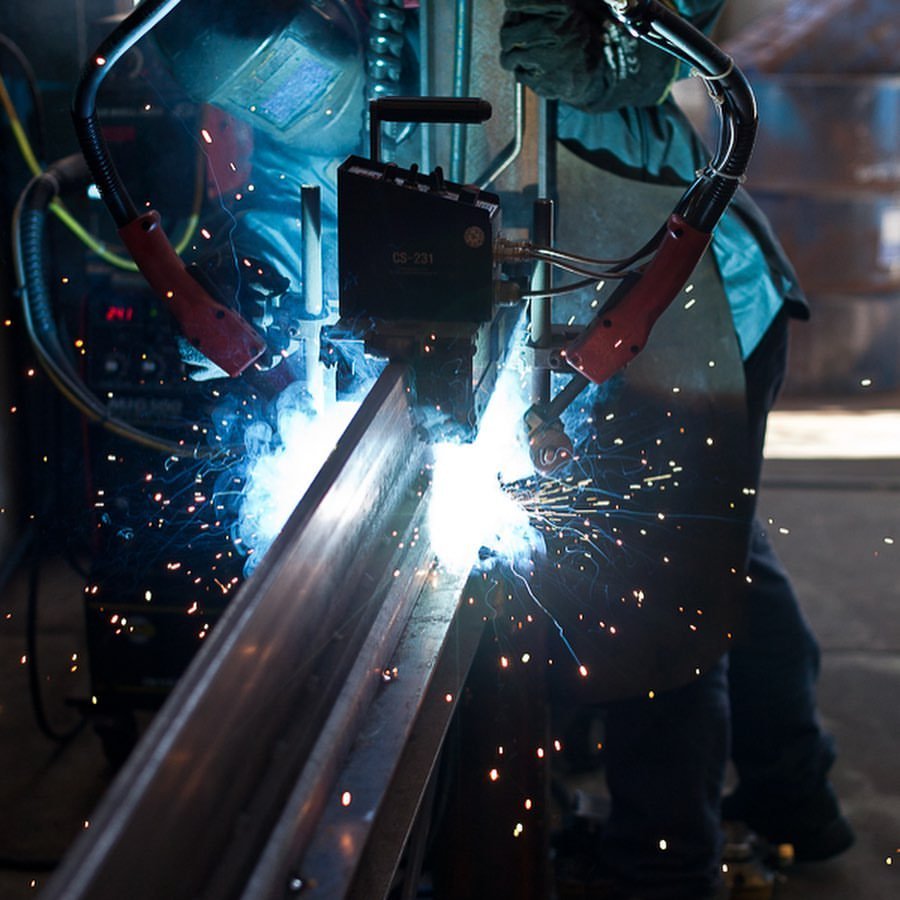
Most anchor welding is dissimilar: a stainless or nickel-alloy anchor to a mild or carbon-steel shell. The refractory designer has assumed the weld is at least as strong as the anchor. It often is not, and a lining fails at its weakest weld.
Do
- ✓Use 309 or 310 consumable when welding 304, 321, 309 or 310 anchors to carbon-steel shells. 309 is preferred for lower hot-cracking risk.
- ✓Grind every weld location to bare metal immediately before striking the arc; kiln atmospheres leave iron and concrete contamination.
- ✓Keep 310 weld beads linear or slightly concave and control heat input to avoid hot cracking.
- ✓Prove and test a new procedure, or follow a documented one that matches the application.
- ✓For stud welding, allow a stud length of at least 25 to 30 mm for the chuck, use the correct chamfer and flux ball, and prove the stud design before ordering the full quantity. Pressform will assist with trials.
Don't
- ✕Use molybdenum-bearing consumables (316-type) on these joints, because embrittling phases can form.
- ✕Weld over moisture, overspray, paint, marking ink, lubricant or dew.
- ✕Substitute a different stud diameter from the one specified: 304 studs on carbon steel give a reduced-strength weld, and the designer has sized the stud for it.
- ✕Leave "globular" convex 310 welds; they tear as the surface cools.
Technical advice is available from our metallurgist, and Pressform has assisted refractory engineers with failure investigations and with weld procedures for dissimilar joints on furnaces that may be decades old.
Specials, custom anchors and problem-solving
Around a third of the catalogue types exist because a customer had a problem the standard shapes did not solve: the Twisted Anchor was devised for Loy Yang's brown-coal drying ducts, the Spring Locking Clip for arms leaning during pours, the Fibre Lok pin for ceramic-fibre blanket. If your refractory designer has drawn something that is not on this page, send the drawing: Pressform designs, builds and maintains its own tooling, so a special is a tooling job in our own factory rather than a request to a third party.
We also take on the other direction, anchors that have failed. We can investigate, report, recommend and develop a replacement design, drawing on our own experience, manufacturer literature and R&D laboratories we work with.
Metal pressing and tooling →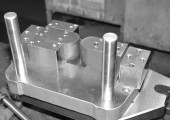
Where Pressform anchors are used
Cement
Kilns, preheaters, coolers and ducting.
Steel and iron
Ladles, furnaces, hoods and off-gas systems.
Alumina, nickel and mineral processing
Calciners, roasters, flash smelters, cyclones and transfer chutes.
Petrochemical and refining
Heaters, reformers and FCC units.
Power generation
Boilers and drying ducts, from the original Loy Yang project onward.
Incineration, waste-to-energy, lime, glass, heat treatment
Any lined vessel with a steel shell.
Anchors ship from Bassendean, Western Australia, to customers across Australia and worldwide.
How to specify and order refractory anchors
Nominate the type
Use the PF code from the range above or the catalogue, or send your own drawing.
Specify the details
Wire diameter, anchor height (A dimension), base style, leg angle and corrugation if non-standard, alloy grade, and quantity.
Tell us the service
Temperature, atmosphere and lining type help us confirm the alloy and flag anything the design should allow for.
We quote in writing
Unit price, tooling if a special, lead time and freight to your site or port.
Manufacture, inspect, ship
Made to order in our factory, checked under our quality management system, packed for road, sea or air freight.
Why refractory engineers specify Pressform
We designed the Rod Lok
The 1978 Rod Lock & Rota Lock anchor became the industry name for the type.
Fifty years, fifty million anchors
Manufacturing since 1976; close to 50 million anchors supplied worldwide.
A metallurgist runs the company
Founded and led by John Worner; alloy and weld advice comes with the product.
Our own tooling, our own factory
Specials are made here, not subcontracted; 2,200 m² in Bassendean with pressing, punching, laser cutting, welding and stud production on site.
Patented and standards-referenced hardware
Spring Locking Clip patent; stud lugs manufactured and installed to AS/NZS 1554.2.
Faster installation
The Pressform Stud Welding System welds about 150 lugs an hour against 15 by hand.
Technical support
Welding guidance, failure investigation and procedure development, not just a price list.
Refractory anchor FAQs
What types of refractory anchors does Pressform make?
Thirty-six standard types across V, Y and wire anchors, Rod Lok and locking hardware, stud-weld anchors and studs, hexagonal mesh and cells, and fibre, bi-metallic and block anchors, plus nuts, washers and clips. All are made to order to your dimensions and alloy, and we make specials to drawing.
What alloys are available?
Carbon steel, 304, 316, 321, 309, 310, 253MA, 3CR12, Inconel 600 and 601 and Incoloy 800. As a guide, 304/321 suit oxidising service to about 900 to 950°C, 310 and 253MA to about 1,100°C, and nickel alloys are specified for sulphur-bearing, reducing or cyclic conditions. The refractory designer's specification governs.
What is a Rod Lok anchor?
A two-piece anchor developed by Pressform in 1978: a slotted steel or stainless base welded to the shell, and an 8 or 10 mm wire arm that locks into it and is rotated upright before the pour. Pressform's patented Spring Locking Clip holds the arms vertical during casting.
How does the Stud Welding System work?
Rod Lok bases are supplied as stud-weldable lugs with a forged head and flux ball. A transportable stud welder, supplied with leads, hand pieces, testing gear and consumables, welds them at around 150 per hour, against about 15 per hour by conventional welding.
Can you make anchors to my drawing?
Yes. Pressform designs, builds and maintains its own tooling, so custom anchors and modified standards are made in our own factory. Send the drawing with alloy, quantity and service conditions.
What consumable should I use to weld stainless anchors to a carbon-steel shell?
309 or 310, with 309 preferred for lower hot-cracking risk. Avoid molybdenum-bearing (316-type) consumables. Grind to bare metal immediately before welding and follow a proven procedure.
Do you supply hexagonal mesh (hexmesh)?
Yes. PF Hexagonal Mesh in 19 to 35 mm strip widths, 1.5 to 2.0 mm thick, in 304, 310, 316, 321, 253MA, Inconel 600/601, Incoloy 800 or mild steel, rollable to a 320 mm minimum diameter and available in custom shapes for cones. Individual hexagonal cells are also available.
What is the minimum order?
There is no fixed minimum; small quantities for repairs and trials are quoted the same way as project volumes.
Do you ship internationally?
Yes. Anchors are manufactured in Bassendean, Western Australia, and shipped to customers across Australia and worldwide by road, sea or air freight.
What is the lead time?
Standard types are made to order; lead time depends on alloy availability, quantity and whether tooling is required, and is confirmed in writing with every quote.
Can you help with an anchor or lining failure?
Yes. Pressform has assisted refractory engineers with failure investigations, wrongly specified alloys and dissimilar-weld procedures for many years. Send photographs, the original specification and the service conditions.