
Robotic Welding Services
Production welding of steel, stainless and aluminium components on a Panasonic robotic cell, with the jigs designed and built in the same workshop, and the parts cut, formed and finished there too.
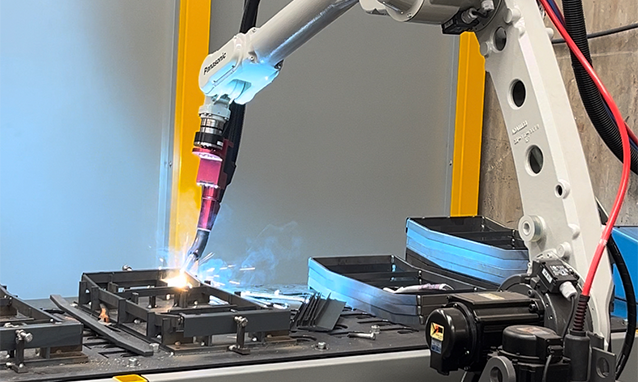
If you need the same welded part every month, a robot welds it faster, cheaper and more consistently than a person, provided somebody has designed the jig and proved the program properly. Pressform does both. Our Panasonic industrial robotic welding system has a 2,000 mm reach and runs MIG and TIG on mild steel, stainless steel and aluminium, plus hard-facing. Send the drawing and the annual quantity, and we will tell you whether it pays.
Robotic welding for repeat components
A welding robot does not weld better than a good welder. It welds the same. Every unit gets the same torch angle, travel speed, wire feed and dwell, so weld size, penetration and appearance are identical from the first part to the thousandth, at a cycle time a manual welder cannot sustain for a shift.
That makes it the right tool for components that repeat: brackets, clamps, supports, frames, housings, guards, pipe supports, skids and sub-assemblies made in batches or on standing orders. It makes it the wrong tool for genuine one-offs, which go to our manual bays. Manual welding services →
Pressform runs robotic welding inside a fabrication and pressing works, which matters more than it sounds. The blanks are laser cut here, the formed components are pressed or folded here, the jig is built here, and the welded part is machined, painted and inspected here. The robot is one station in a line that starts with plate and ends with a finished, delivered component.
Part of our complete metal fabrication capability →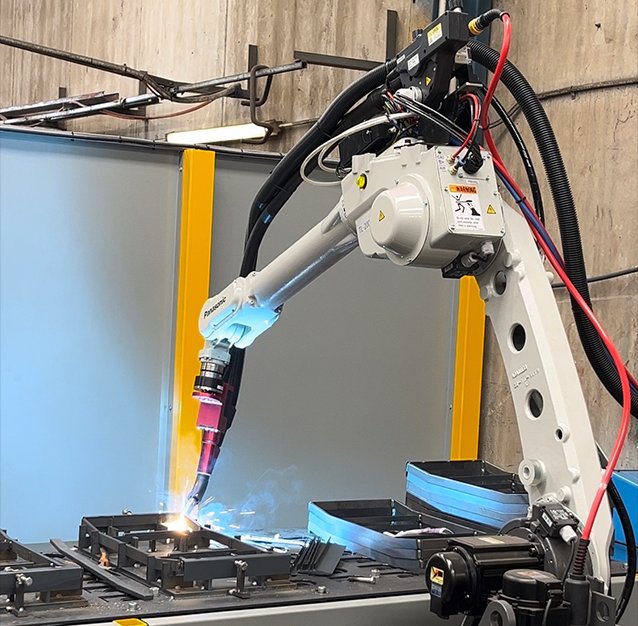
Robotic welding capacity
When robotic welding pays, and when it doesn't
Robotic welding makes sense when
- The same part is needed repeatedly, in batches, standing orders or annual volumes.
- Weld consistency or appearance is specified, not just strength.
- The assembly has many short welds that are slow and fatiguing by hand.
- You have had inconsistent batches from manual welding elsewhere.
- Labour cost per part matters more than tooling cost.
Manual welding makes sense when
- The part is a one-off or a very short run.
- The part changes every batch, so a jig and program would not be recovered.
- The structure is too large or heavy for the cell, so those go to our manual bays under 10-tonne cranes.
- Access or geometry needs a welder's judgement on every joint.
How it works out in practice
A jig and program are a one-off cost. After that, each part costs less than it would by hand. The break-even quantity depends on the part, on how many welds there are, how long they are and how much fixturing it needs, which is why we ask for the annual quantity with every drawing.
Below the break-even we quote manual; above it we quote robotic; and if it is close, we tell you and let you choose.
Illustrative only. Your break-even depends on the part.
Jigs designed and built in-house
The robot is the easy part. The jig, the fixture that holds every component in exactly the same place every time, is what decides whether robotic welding works. Pressform designs and builds its own.
Design
Our engineers take your drawing, work out the weld sequence, the clamping and the torch access, and design a jig for it. Where a small change to the part would make it easier to fixture, we say so.
Build
The jig is made in our tool room, laser cut, machined and welded here. Tool making and machining →
Prove
The program is written and first-off parts are welded and measured against the drawing. You approve before the run.
Run and repeat
Jigs are stored and maintained between batches, so a repeat order goes straight to the cell.
Production components from plate to painted part
Most robotic welding suppliers weld what you send them. Pressform makes the components as well.
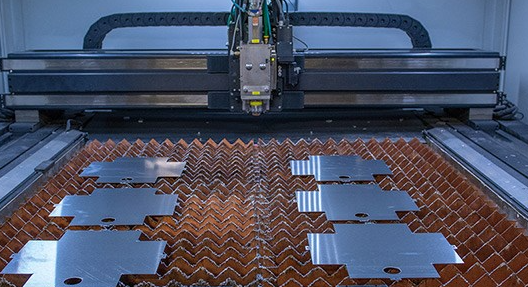
Formed components
Press-brake bending, plate rolling, and pressed parts from our 630-tonne press.
Robotic welding
On the jig, proved on first-offs before the run.
Finishing
Electrostatic 2-pack and enamel painting on site; powder coating, galvanising, plating and anodising arranged.
Inspection and delivery
Every batch checked under our quality management system; Perth metro on our own truck, road freight interstate.
One drawing, one purchase order per batch, one supplier accountable for the finished part.
Robotic welding for OEMs, equipment builders and product companies
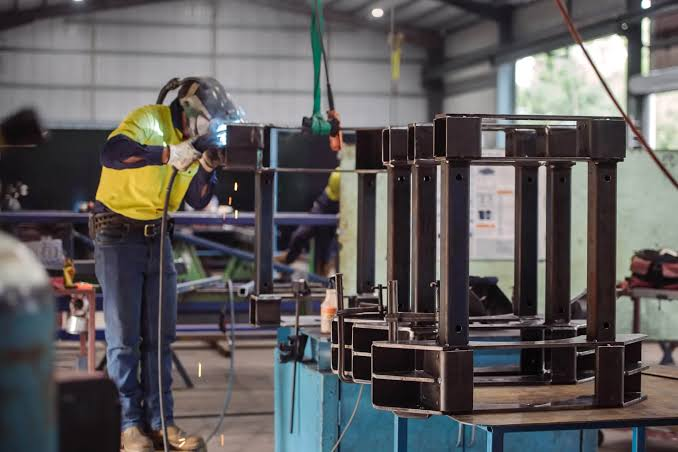
OEMs and equipment manufacturers
Frames, brackets, housings and sub-assemblies on standing orders.
Mining and industrial suppliers
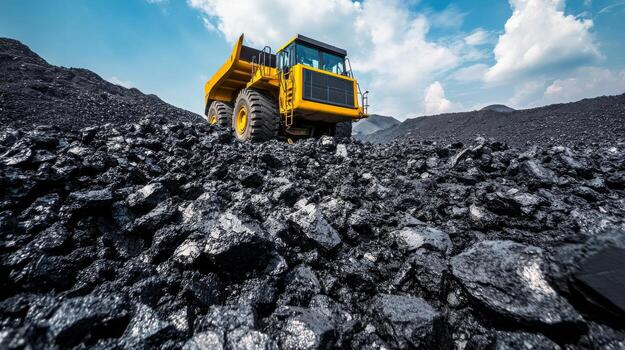
Pipe supports, clamps, guards, wear assemblies and spares in volume.
Transport and automotive
Chassis brackets, mounts and body hardware.
Product companies
A welded part currently made by hand, imported, or inconsistent batch to batch.
Fabricators and engineering shops
Robotic capacity for repeat work they don't want to set up for, including trade work.
Interstate customers
Components shipped Australia-wide from Bassendean, Western Australia.
How to get parts robotically welded at Pressform
Send drawing & quantity
STEP, DXF or PDF, with material, weld specification, finish and the annual quantity. A sample part is fine.
We assess it
Manual or robotic, jig requirements, any design-for-welding changes, and the break-even, all in the quote.
Jig and program
Quoted once; built and proved on first-off parts you approve.
Production
Batches scheduled to your call-off, with the jig held for repeat orders.
Inspect, finish, ship
Checked, finished as specified, then freighted Australia-wide or collected.
Why choose Pressform for robotic welding
The jig is ours
Designed, built, proved and stored in the same workshop as the cell, the part that most robotic welding suppliers outsource.
Components made here
Laser cut, pressed and folded on site, so fit-up on the jig is right and the cost is one line, not three suppliers.
Honest routing
If manual welding is cheaper at your quantity, that is what we quote.
Metallurgy on staff
Stainless, aluminium and hard-facing procedures set by a metallurgist, not by trial and error.
Manual capacity behind the robot
Four manual processes and 10-tonne cranes for the parts that are too big or too few.
Almost 50 years of production work
Established 1976; production pressings, punchings and weldments for Australian industry ever since. Every batch passes our ISO 9001 quality management system.
Production welding from Bassendean
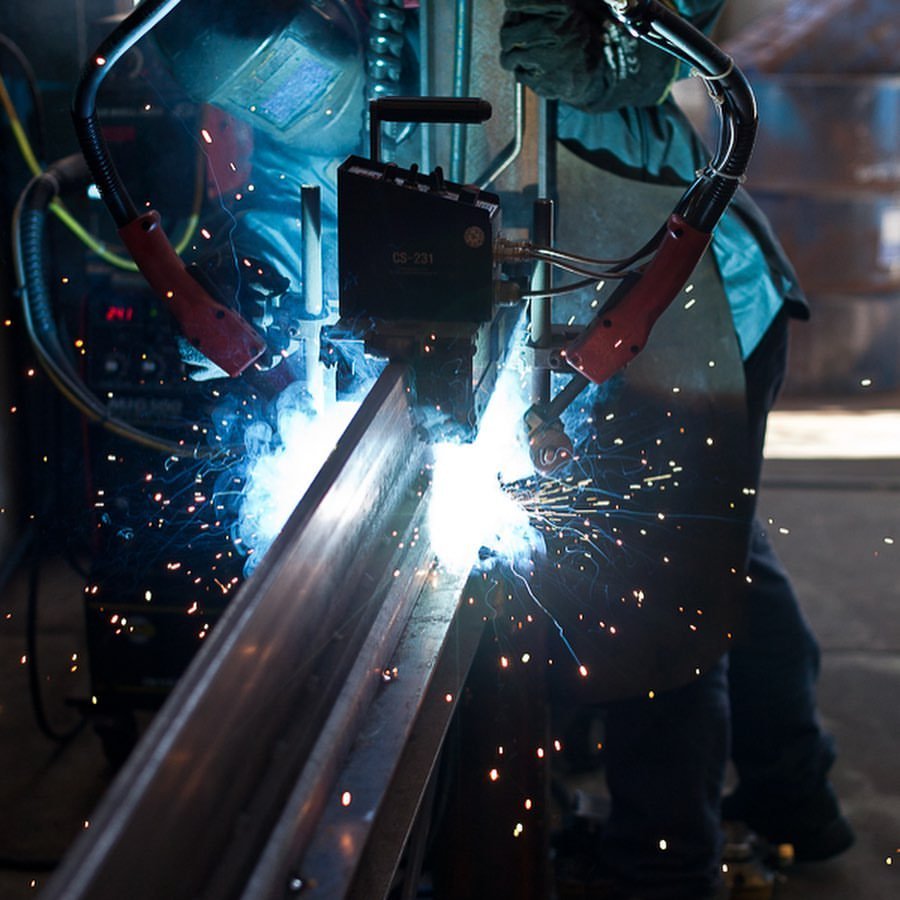
Robotic welding cell in action
Batch pipe support hangers
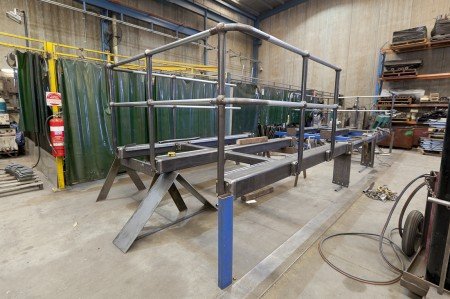
Welded steel skid
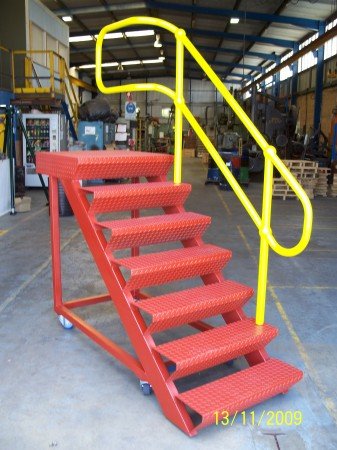
Guard and access assembly
Robotic welding FAQs
What quantity makes robotic welding worthwhile?
It depends on the part. The jig and program are a one-off cost; each part after that is cheaper than manual welding. Simple parts with many welds break even at lower quantities; complex parts with few welds need more. Send the drawing with an annual quantity and we will quote whichever is cheaper, and tell you where the break-even sits.
What materials can the robot weld?
Mild steel, stainless steel and aluminium, with MIG and TIG processes, plus hard-facing alloys for wear surfaces.
How big a part can you robot-weld?
The cell has a 2,000 mm reach. Larger structures are welded manually under our 10-tonne cranes.
Who makes the jig?
Pressform does. The jig is designed by our engineers and built in our tool room. It is quoted once and held for repeat orders.
Can you make the components as well as weld them?
Yes. Laser cutting, punching, pressing, bending, machining and painting are all on site in Bassendean, so we can supply the finished welded component from plate.
Is robotic welding as strong as manual welding?
Yes, when the procedure is right, and it is more consistent, because every weld is made with the same parameters. Procedures are set for the material and joint and proved on first-off parts.
Do you weld to Australian Standards?
Yes. Welding is carried out to AS/NZS 1554 and ISO 3834 quality requirements for fusion welding, for both manual and robotic processes.
Do you supply interstate?
Yes. Components are made in Bassendean, Western Australia, and shipped by road freight to customers across Australia.
What is the lead time?
A new part needs the jig designed, built and proved first. As a guide, that is typically 3-4 weeks depending on complexity. Repeat batches, once the jig exists, often turn around in 1-2 weeks. Both are confirmed in writing with every quote.
Can I see the cell before committing?
Yes. Customers are welcome to visit the Bassendean workshop and watch first-off parts being welded.